
Analyzing Basic Poker Concepts: A Guide for Casual Players
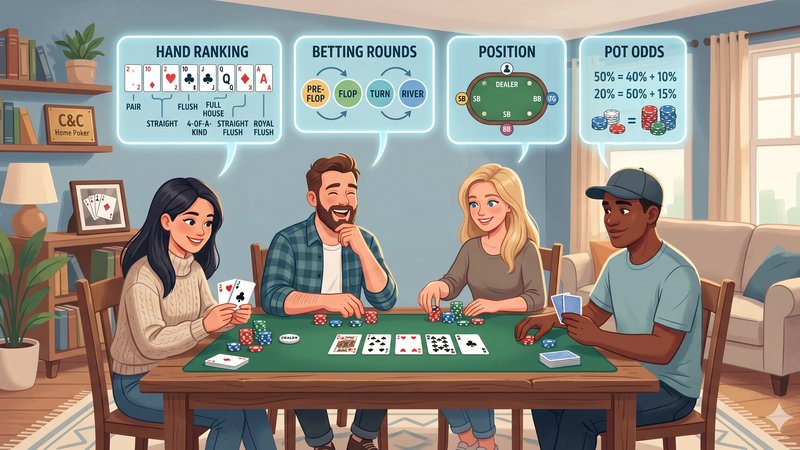
Entering a poker simulator for the first time can be overwhelming. While the rules of the game are simple, the strategy is deep. Before diving in, it is important to establish a clear disclaimer: there are no guaranteed wins in poker. The game involves a combination of skill, psychology, and luck; no single approach can ensure a profit every time.
The Importance of Position
In our opinion, position is one of the most overlooked aspects of the game for beginners. Being the last person to act in a betting round (the "Button") provides a significant informational advantage. You get to see how every other player has reacted to the cards before you have to make a decision.
Based on our review of common playstyles, players who play more hands from late positions and fewer hands from early positions may find their experience more consistent.
Understanding Pot Odds
Pot odds are a way of calculating whether a call is mathematically justifiable. If the pot contains €100 and your opponent bets €50, you must call €50 to potentially win €150. This means your pot odds are 3:1.
According to our methodology, comparing these odds to the probability of hitting your desired card (your "outs") helps you decide if a call could be profitable in the long run. However, this is a mathematical suggestion, not a certainty.
As you practice these concepts, we urge you to remain mindful of your spending. Responsible gambling is the foundation of a sustainable hobby. If you find yourself chasing losses or feeling stressed by the game, please take a break. Many platforms offer self-exclusion tools to help you maintain a healthy balance.
Common Mistakes for Beginners
- Playing too many hands: In our opinion, the biggest mistake beginners make is playing every hand. This often leads to rapid losses.
- Overvaluing a pair: A high pair is strong, but it may be beaten by a straight or flush. Learning to fold when the board becomes dangerous is a key skill.
- Ignoring the opponent: Poker is a game played against people (or AI), not against the cards. Paying attention to betting patterns may provide clues about the strength of a hand.
It is also worth noting that poker simulators are an excellent way to learn without the pressure of a live table. They allow you to test theories and observe patterns in a controlled environment. However, remember that AI behavior may differ from human behavior in a real-world setting.
Summary of Approach:
- Focus on position to gain information.
- Use pot odds to guide your decision-making.
- Maintain a strict budget to ensure you play within your limits.
In conclusion, while you can improve your game through study and practice, poker remains a game of variance. The goal should be to make the most mathematically sound decision at the time, accepting that the outcome of any single hand is never certain.